- Products
- All Products
- RF PA Extension Kit
- Wireless Microphone Upgrade Packs
- In-Ear Monitor Upgrade Packs
- Wireless Microphone Antennas
- Wireless In-Ear Monitor Antennas
- Antenna Distribution for Microphones
- Antenna Combiners for In-Ear Monitors
- Multi-Zone Antenna Combiners
- Spectrum Tools
- Accessories, Cables and Parts
- Solutions by Venue
- Resources & Training
- Performance Tools
- About Us
Related Videos
Frequently Asked Questions
What is a combiner?
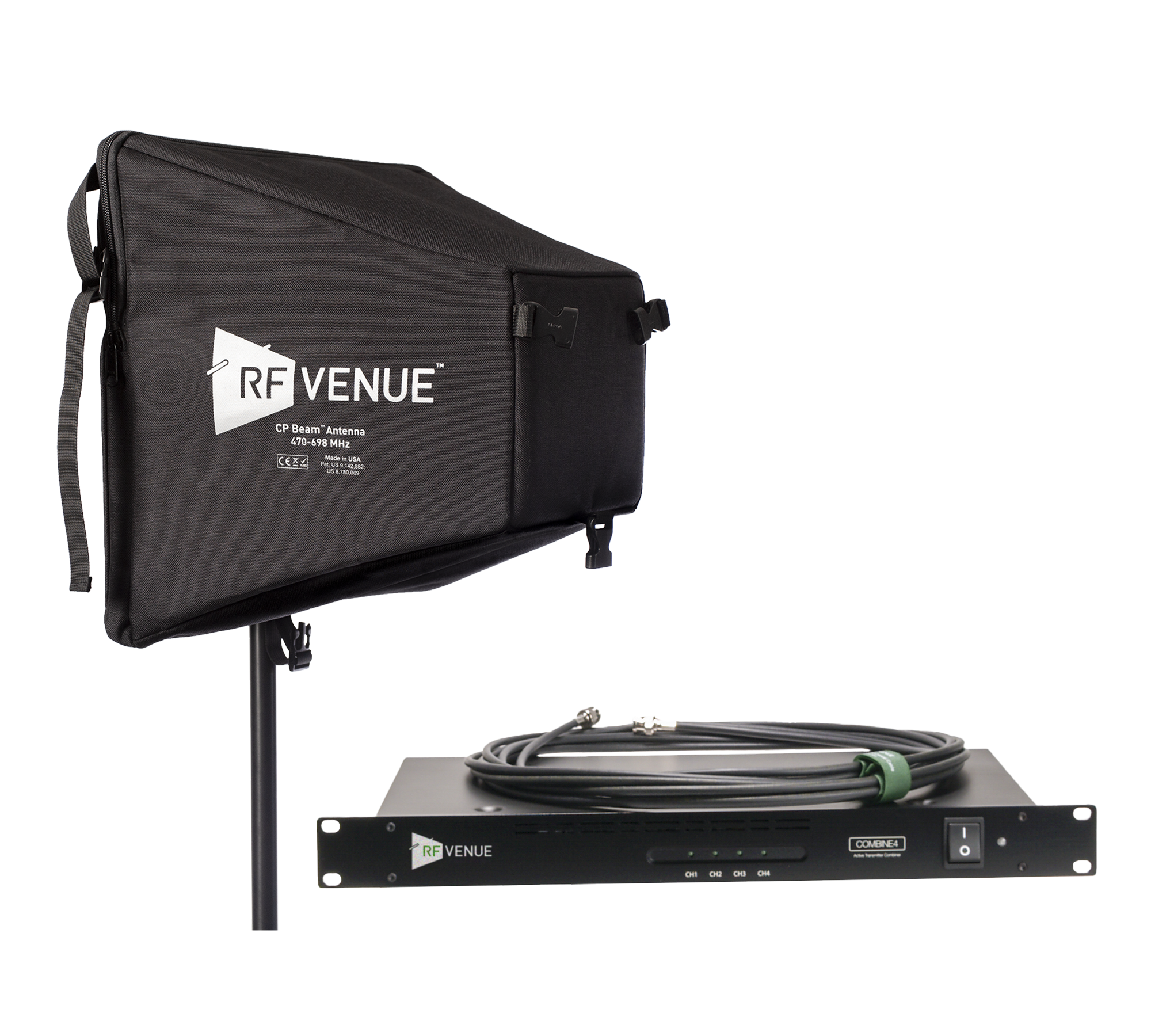
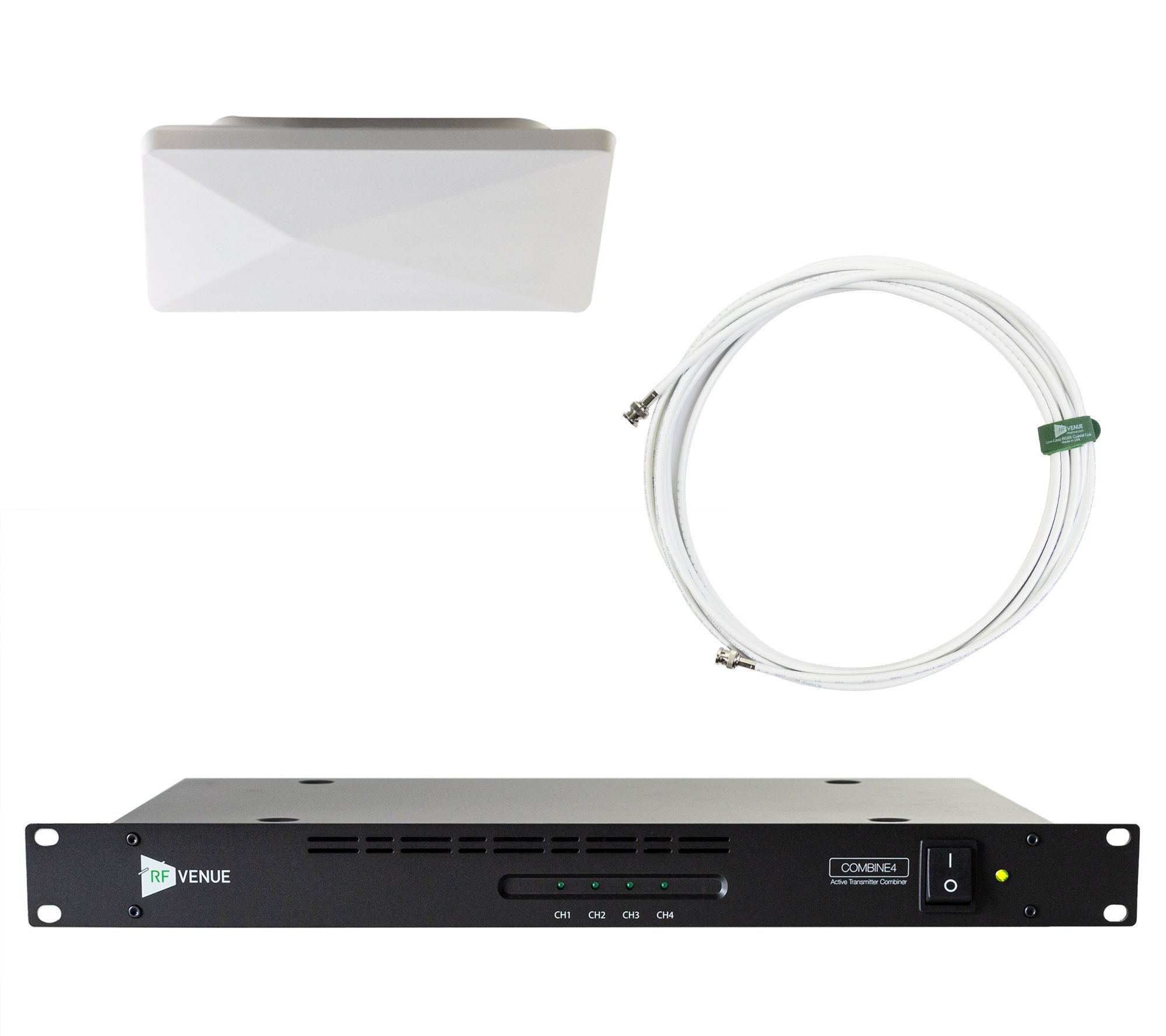
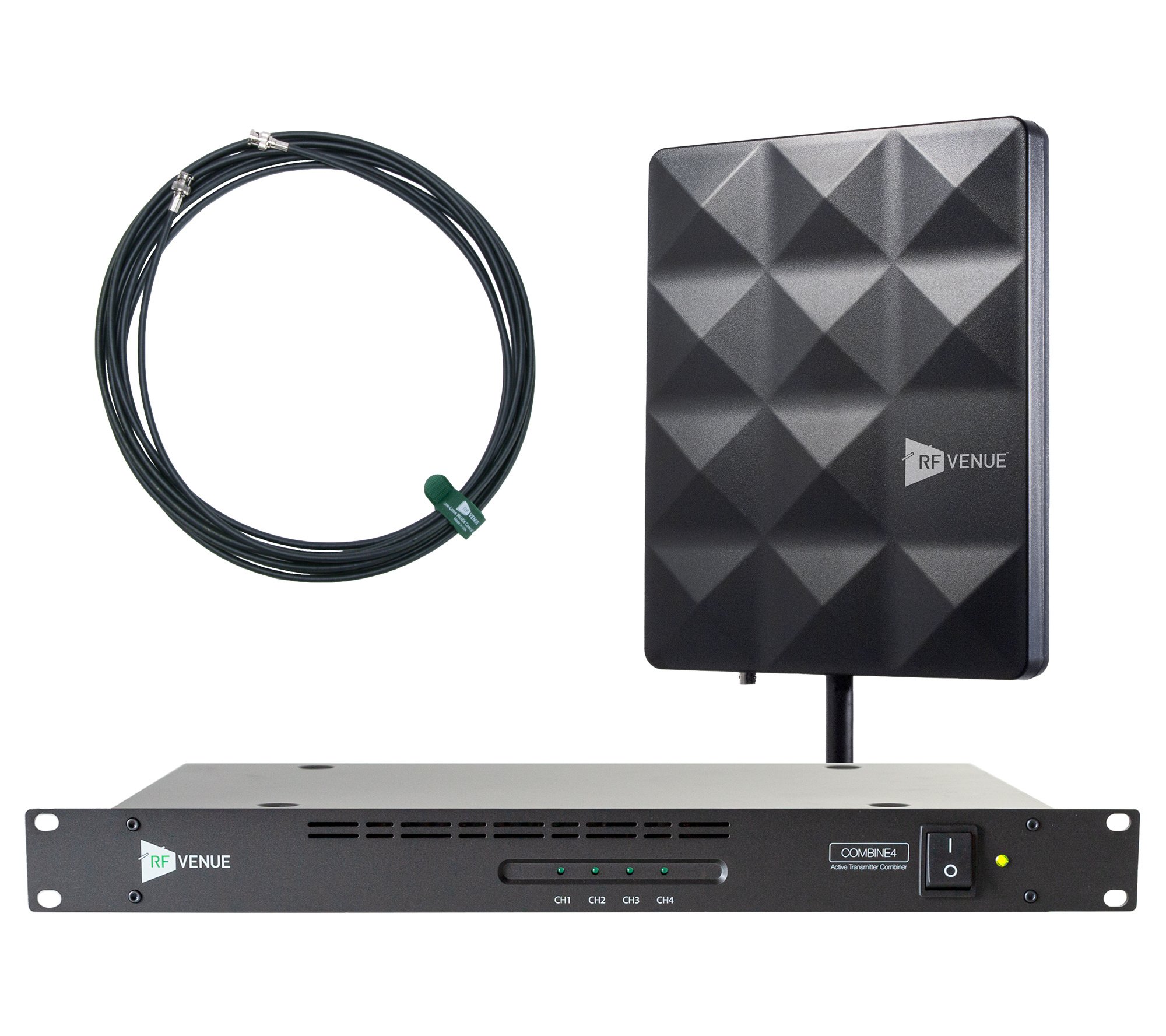
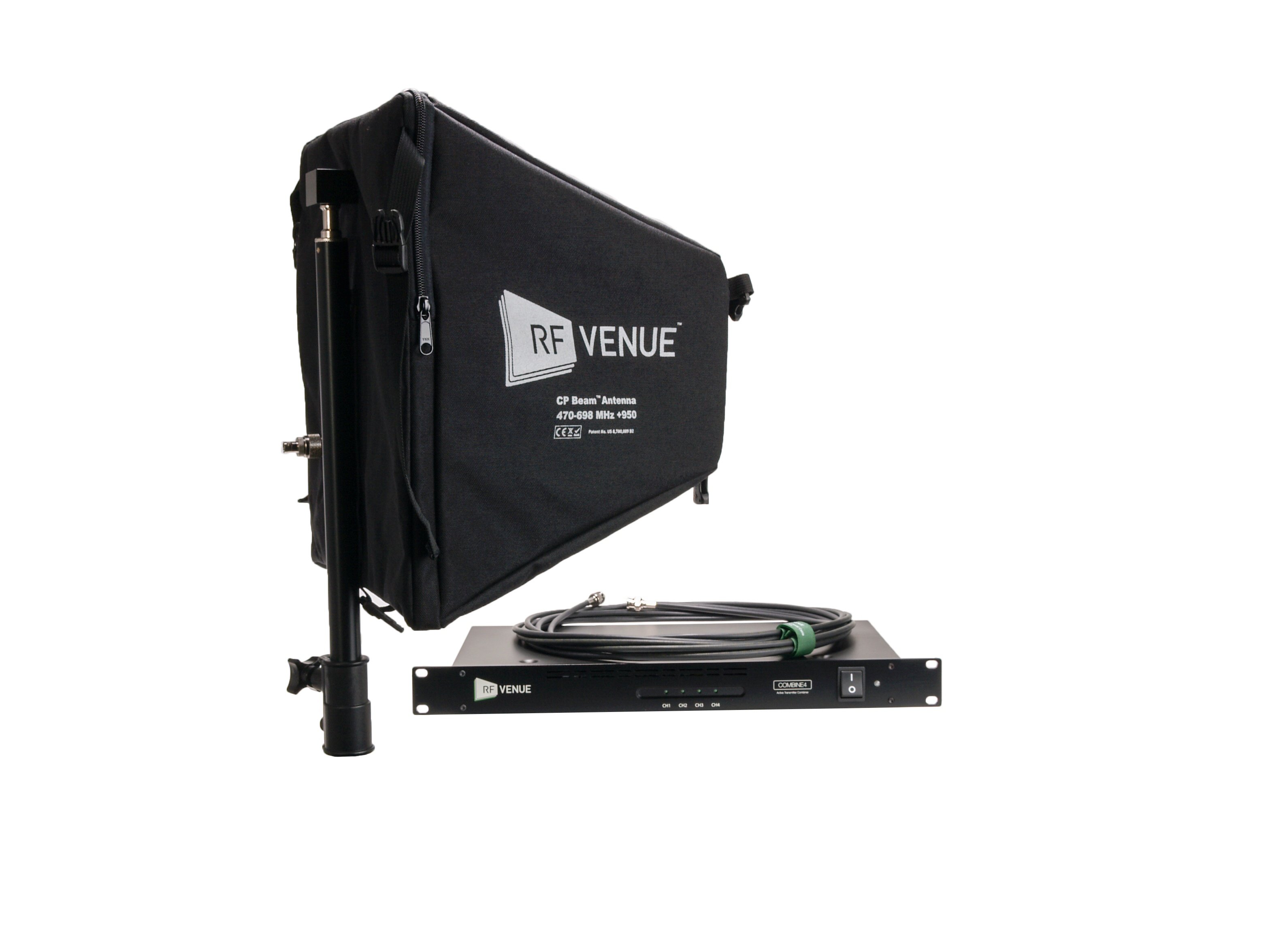
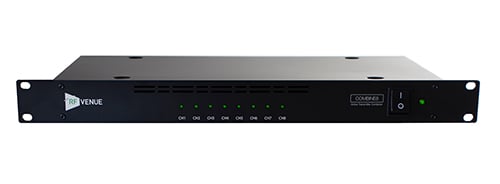
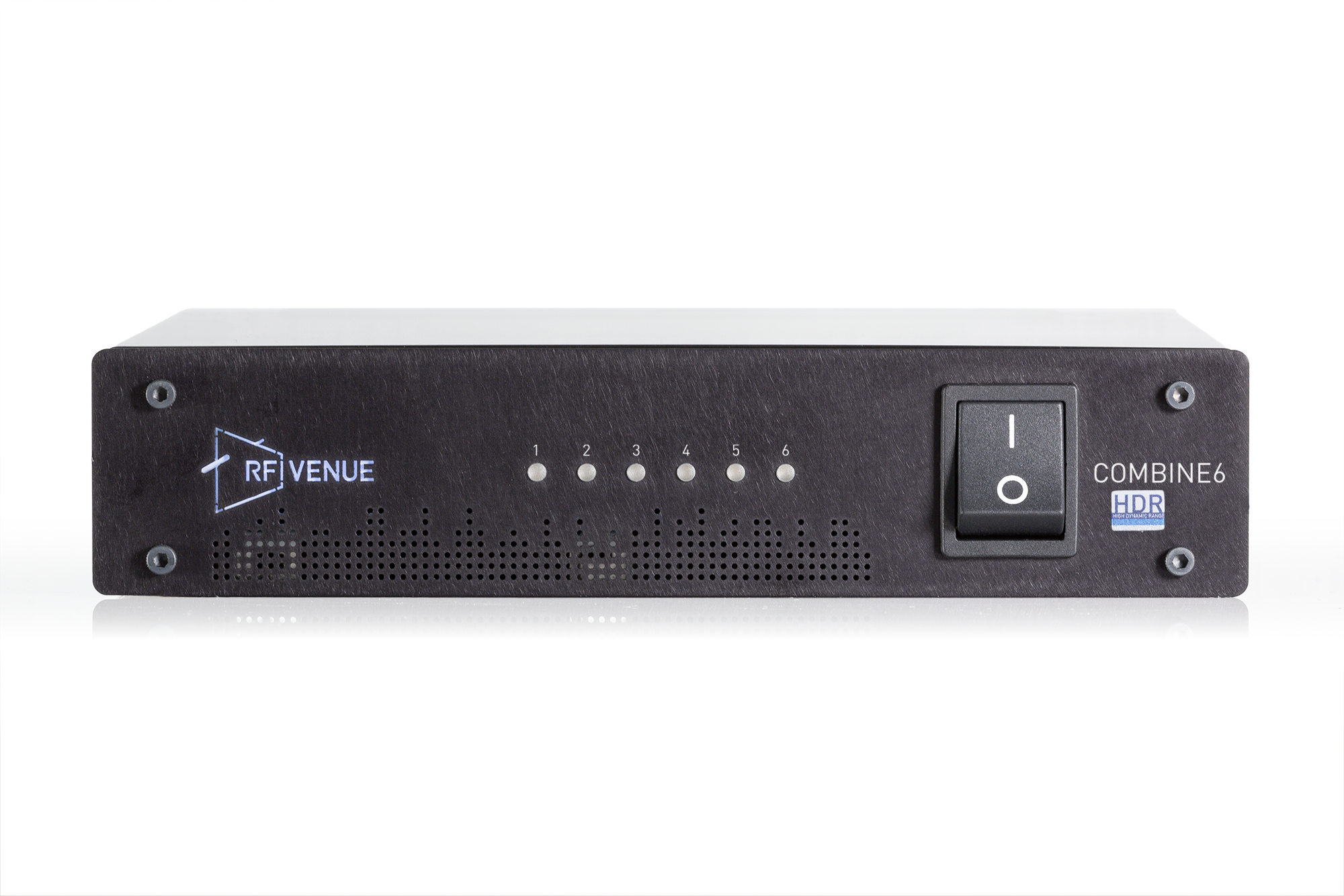
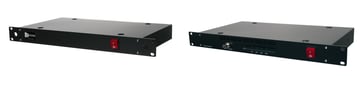
RF combiners are used in the A/V world for pushing multiple IEM transmitter signals through a single antenna. They solve the same problems as distributors, except the signal path is reversed--instead of passively receiving multiple signals through one antenna pair, they actively send multiple signals through a single antenna.
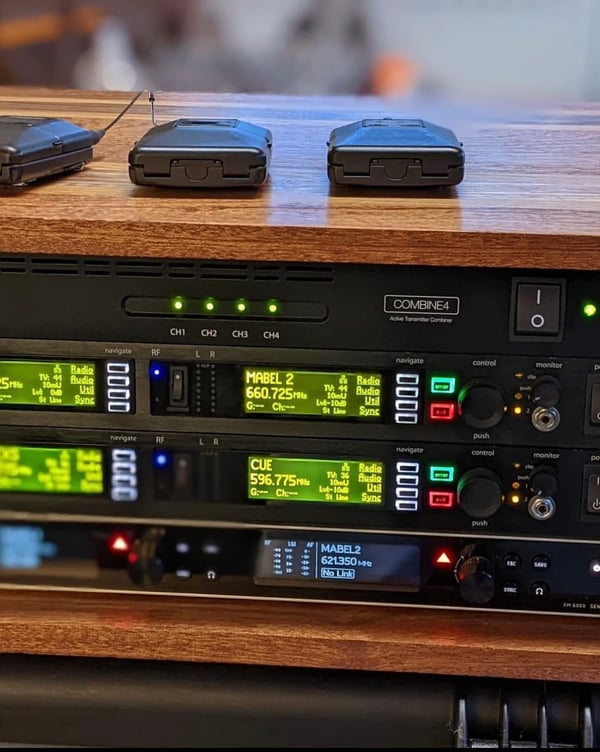
For live sound applications where each member of a band has a custom mix routed through an individual IEM (in-ear monitor), combiners are essential components. They reduce clutter at the rack by eliminating whip antennas, provide DC power, and reduce intermodulation caused by antenna farming while allowing the technician to directly focus a beam of RF directly at the stage--assuring all talent receives their IEM mix interference free.
What are the main benefits of antenna distribution for IEM transmitters?
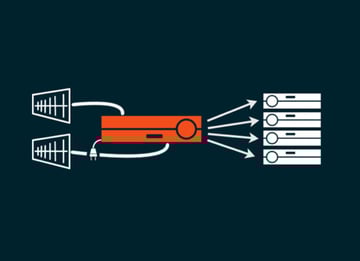
Multiple transmitters: one antenna.
Multiple transmitters: one antenna. Clean, easy. No crazy antenna farms.
Freedom to place that one antenna elsewhere in the venue or on stage wings for better line-of-sight and improved SNR.
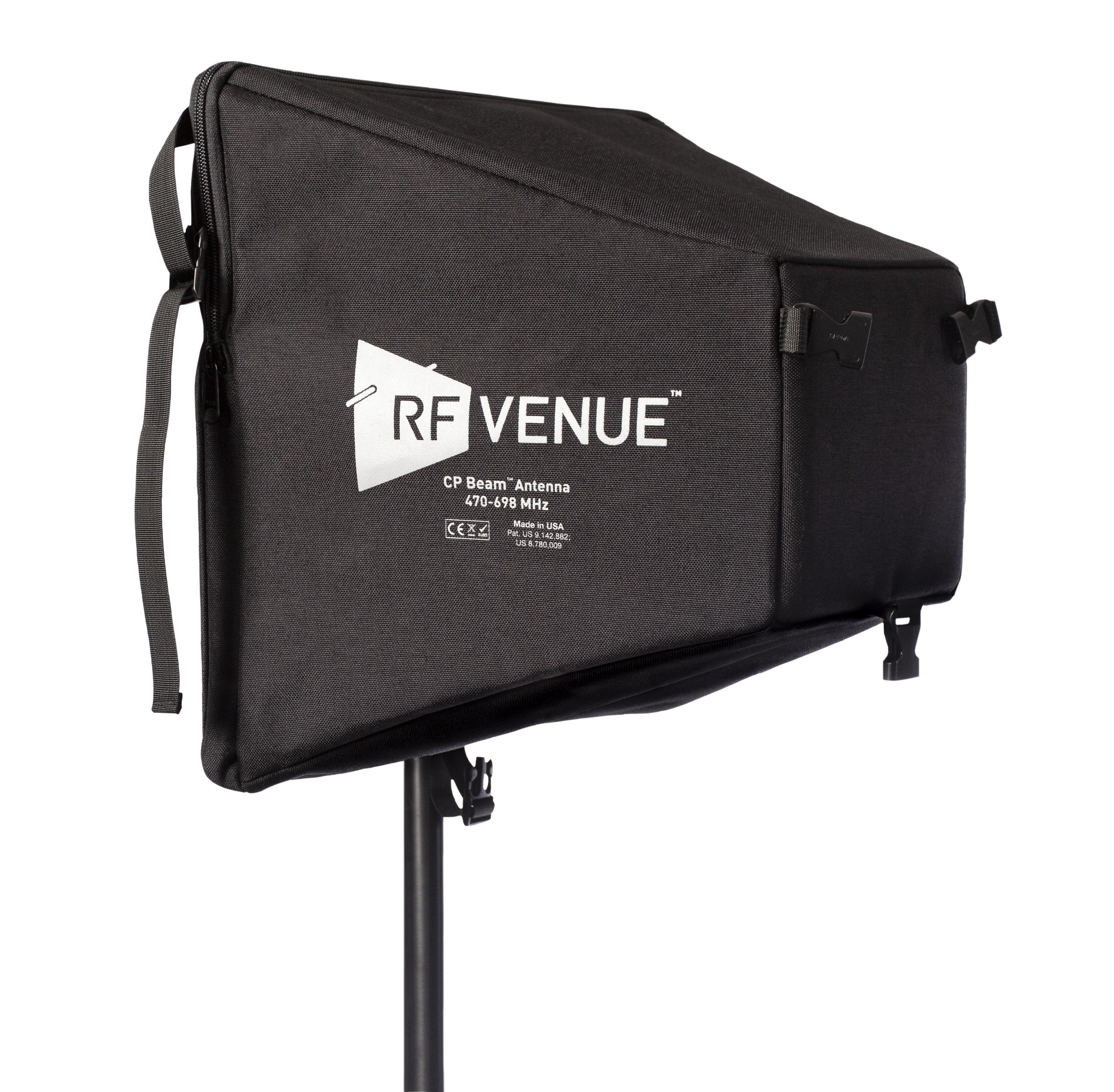
Ability to use specialized antennas designed specifically for IEM applications, like the CP Beam.
DC power distribution on most Tx distributors means no wall warts and a cleaner looking rack
Racks without PSUs and multiple whip antennas also provide better RF performance. This is especially true with IEMs, vs. passive wireless microphone antenna distribution.
Can I mix RF Venue products with other brands?
Yes, as a general rule: Wireless mic systems, distro systems, antennas, and coax cables from nearly any brand can be successfully used together, provided that they operate in the same frequency range and within the rated power levels. You can add an RF Venue distro to an existing distro from another manufacturer to provide for additional wireless mic systems. It is unlikely, however, that you could mix a transmitter from one manufacturer with a receiver from another even if the frequencies match because of their coding schemes.